[The Dignity of Relationships] How Do You Build Trust When Logic Isn’t Enough? A Perfectionist Human + a Clever Cat in 3 Stages

If you’ve ever thought, “But I’m literally doing this for you,” and still got the cold shoulder—congrats. You’ve met the part of life that can’t be solved by logic alone.

Today was a vet day for my cat Byul (and yes, he’s a him 🥲). He’s smart, sensitive, and—like most cats—an absolute master of emotional negotiation.

Logically, I did everything “right.”
I told him in the morning we were going to the clinic. I didn’t chase him down or wrestle him into the carrier. I used the method that feels most respectful: I put treats in his stroller/carrier so he’d walk in voluntarily, then I closed the door and took him in.

So from my perspective:
✅ responsible
✅ gentle
✅ health-first
✅ no betrayal

From his perspective:
I will be filing a complaint with the universe.
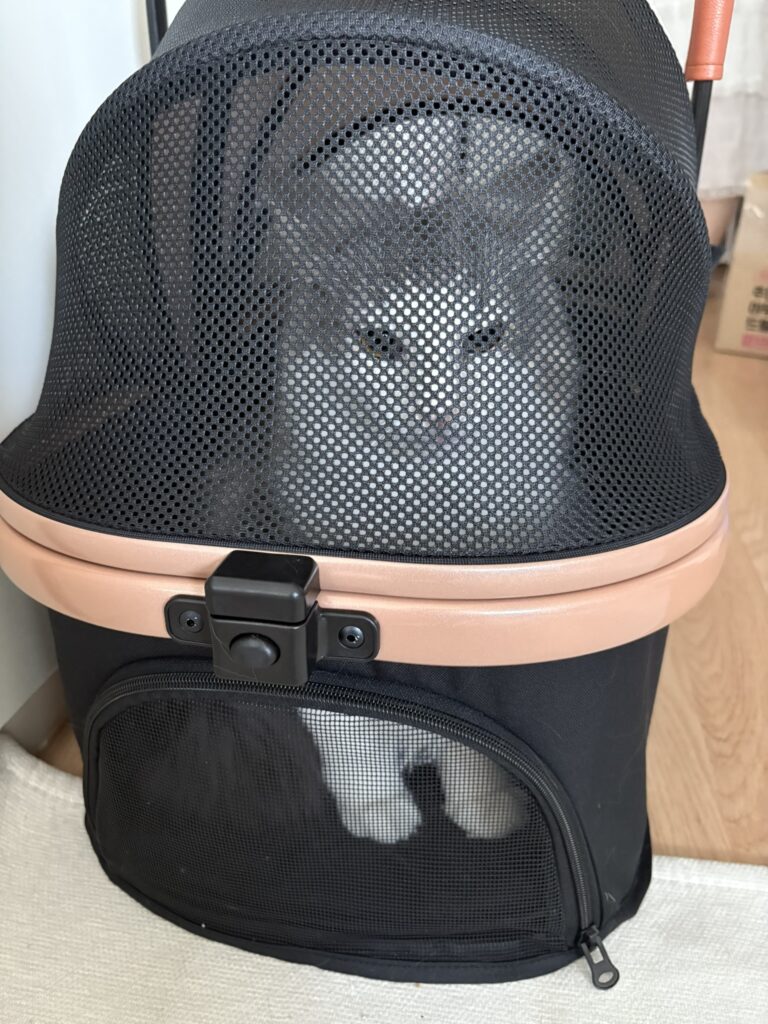
Byul’s face when she realized it was vet day.

When we got home, I offered a treat like a peace offering. He came over like, “OMG treat!” then paused… visibly thinking… and walked away.

I swear his inner monologue was:

  • “Wow, treat.”
  • “But if I eat it right now, she’ll think this technique works and take me again.”
  • “Also… I refuse to be publicly bribed. I have standards.”

So I put the treat in a bowl, went to the bathroom, and when I came back… the bowl was spotless and he’d already vanished into his hideout. 😂

That moment basically summarized my biggest takeaway from living with Byul:

Relationships aren’t maintained by logic alone. They’re maintained by trust—built through repeatable patterns.

Below are the three stages I keep seeing, over and over, in our everyday life together.


Quick Summary (for fellow “T-types” who love structure)

  • Stage 1: Boundaries — protect what matters from external noise.
  • Stage 2: Design — don’t force cooperation; build rules + autonomy so cooperation becomes the easiest option.
  • Stage 3: Repair — even when you’re “right,” you repair feelings first, because safety beats correctness.

Stage 1: External Noise + Strategic Boundaries

(a.k.a. “I wanted to snap, but I didn’t.”)

Two different places. Two different stressors. One theme: people who don’t realize how intense their energy is.

The “oblivious dog owner” moment happened at a handmade pet treat shop

This part matters: it wasn’t at the hospital. It happened at a handmade pet treat shop—and not just any shop. It’s my teacher’s business. Someone who taught me, someone I respect, and it’s her space.

A dog owner saw my cat and started encouraging their dog like, “Go look! Look at the cat!”
The dog got louder, Byul got tense, and I was standing there thinking… Please don’t treat my cat like a display item.

But because it was my teacher’s place, I couldn’t freely react the way I wanted to. I didn’t want to create tension in someone else’s business because a stranger lacked social awareness.

So I stayed quiet. Not because I approved. Because I chose the option that wouldn’t escalate the situation for the person I actually cared about: Byul.

The vet clinic had its own type of chaos

Then at the clinic, the waiting area had barking dogs and stressed owners—one of those places where anxiety feeds itself. Byul doesn’t see dogs often, and he’s a shy cat. He was literally trembling.

(He also has a heart condition that we monitor, so I’m especially sensitive to stress spikes. I’m not offering medical advice here—just sharing why I pay attention.)

What I learned

Sometimes the most mature response isn’t confrontation. It’s containment.

Not because you’re weak—because you’re preserving your energy and keeping your responsibility safe. When you’re caring for someone who can’t advocate for himself (a cat, a child, even a partner in a fragile moment), your job isn’t to win social debates. Your job is to reduce harm.

Practical “no-drama” boundary moves

If you’re ever in a noisy place with a sensitive pet (or honestly… even just yourself):

  • Cover the carrier/stroller with a towel to reduce visual triggers
  • Sit in a corner and face the carrier inward
  • Ask staff calmly: “Is there a quieter spot we can wait? My cat is very sensitive.”
  • If someone approaches with their dog: reposition physically first (body language is faster than arguing)

And when it’s someone else’s space (like my teacher’s shop), internal boundaries help:

  • “I’m not educating strangers today.”
  • “I’m protecting my pet and leaving the situation quickly.”

That’s still a boundary. It just looks quieter.


Stage 2: Don’t Force It—Design It

Rules + autonomy = long-term cooperation

People sometimes call Byul a “dog-like cat,” but honestly? He’s a real cat.

When he first came to live with me:

  • He didn’t walk up to me.
  • He hid.
  • He didn’t play on command.
  • He hated water and complained loudly during showers.
  • He hated paws being touched, mouth/teeth handling, nail trims… basically all “maintenance tasks.”

But over time, he learned to cooperate—not because he suddenly became “easy,” but because I built a system that taught him:

“This home is predictable. And my boundaries will be respected.”

The foundation: safe zones are truly safe

I keep multiple hideouts around the house. I upgraded his setup as he grew (he’s a big boy—Norwegian Forest Cat energy). When his old cat tower became too small, I installed a larger one with the hammock option he loves.

And I never do the one thing that breaks trust instantly:

  • I don’t drag him out of his hiding place.
  • I don’t pull him down from the tower.
  • I let him self-regulate.

That one pattern teaches a cat something huge: control exists.

The training approach: “You won’t like this, but you can tolerate it.”

I’m a perfectionist. I like rules. So I made rules that were simple, consistent, and fair.

  • Hunting play = Churu. Always.
    If we play, he gets a reward. Predictable.
  • Verbal cues stay consistent.
    “Nails time.” “Teeth time.” He knows what’s coming.
  • I lure, I don’t wrestle.
    When his butt gets dirty and he needs cleaning, I call him and guide him so he comes on his own.

He doesn’t “love” toothbrushing. He makes that extremely clear.
He’ll purr aggressively for treats… and the second toothbrushing starts, the purring cuts off like a light switch. 😂
Like: “I’m cooperating. I do not approve.”

But the bigger point is this: he learned endurance without panic.

“If I tolerate this, I get rewarded—and I stay safe.”

The bathroom compromise (a tiny example of a big principle)

Byul kept wanting to enter the bathroom. I tried blocking it at first. Didn’t work.

So I negotiated:

  • Toilet area = never
  • Shower area = okay (it’s frequently rinsed, so relatively less gross)

If he moves toward the toilet, I say “No!” and use a quick cue (like a few water droplets). Now he automatically avoids that zone and chooses the shower area instead.

This is why “design” works better than power:

  • “No” becomes easier to accept when there’s a clear alternative.

Stage 3: Repair Fast—Even When You Were “Right”

Emotional compensation matters

This is the hardest stage for people who love logic. (Hi. It’s me.)

I did the right thing taking him to the vet. I know that.
But Byul doesn’t live in “logic world.” He lives in “felt safety world.”

So when he walked up to the treat, hesitated, walked away… then ate it instantly when I wasn’t watching… that wasn’t random.

That was politics. 😂
In his world:

  • taking the treat in front of me might feel like “surrender”
  • taking it privately feels like “I earned compensation without losing dignity”

And at the clinic, he finally hissed during a fecal test. The vet initially thought he was calm enough to not need pre-visit calming meds. But once a very personal boundary was crossed in a stressful environment… he reacted.

At home, he basically never hisses. He’s hissed at me only twice in his life:

  1. as a kitten when a big toy scared him
  2. once when he woke up startled because I stretched suddenly

So that hiss wasn’t “bad behavior.”
It was: “This is too much.”

The relationship lesson (that applies to humans too)

You can be logically right and still need to repair emotionally.

Because relationships aren’t powered by proof. They’re powered by safety.

So I still do the repair:

  • “I’m sorry.”
  • “I know you hated that.”
  • “Good job enduring it.”
  • treat, quiet time, hideout respected, routine restored

And yes—later, he comes back. He’ll act like he’s over it and then climb near me in bed, purring like, “Fine. I still live here.” 😭😂
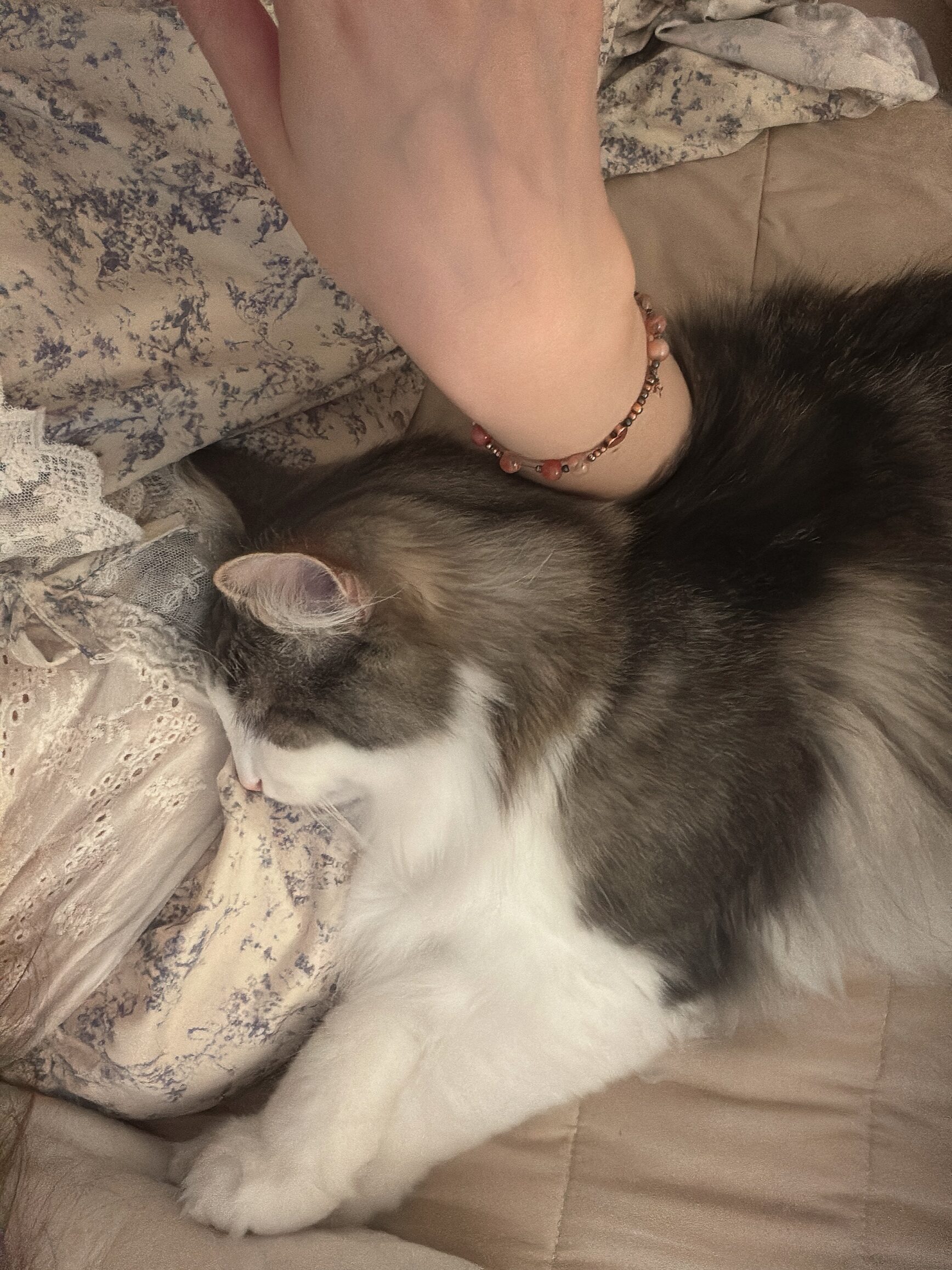
The ‘fine, I still live here’ ending.

Not because he accepted my logic.
Because he trusts my pattern.


Final Thoughts: Trust Isn’t a Speech. It’s a Repeatable System.

Byul didn’t choose this life—I chose him. That means I carry responsibility: health management, routines, decisions he might dislike.

But responsibility only stays peaceful when it’s paired with dignity—when trust is designed through consistent behavior:

  • I don’t force things without reason
  • I protect him from overstimulation
  • his safe zones stay safe
  • after stressful moments, I repair and return to routine

That’s what keeps our home stable.

Not perfect logic.
Not emotional drama.
Just a system that says: you’re safe with me, even when you don’t like what’s happening.


CTA (Call To Action) — One Line in the Comments

Have you ever been technically right but still had to repair the relationship?
Drop one line: what’s your go-to “repair phrase” (with a partner, family member, coworker… or pet)?


How Living With a Cat Changes Your Life: 7 Lessons from Byul

Byul sleeping on a cat tower by the window (living with a cat)

Living with a cat didn’t just add cuteness to my day—it changed my routines, my home, and the way I think about trust. Before I lived with a cat, I assumed the experience would be mostly about occasional chaos and a few cute photos. I didn’t expect it to quietly reshape the structure of my daily life.

My cat’s name is Byul (별, “star”). He didn’t change my life through dramatic moments. He changed it through small, repeatable patterns: quiet presence, clear boundaries, and trust that has to be earned.

Below are the 7 lessons I’ve learned from living with him—practical, real-life, and sometimes a little ridiculous (yes, including an “oops” episode).


1) Living with a cat feels emotionally “clean” in a way humans aren’t

One thing that stands out about living with animals—especially cats—is how emotionally straightforward it can feel. Cats don’t judge your career choices, your mood, or your productivity. They don’t lecture you. They don’t pretend.

They just… react to what’s real:

  • your energy
  • your tone
  • your consistency
  • the environment you create

It’s surprisingly refreshing to have a relationship that isn’t built on words, but on everyday signals.


2) Cats teach boundaries without a single speech

Cats naturally keep a comfortable distance and expect you to respect it. In human terms, it’s like learning “healthy boundaries” without having to talk about boundaries.

  • If Byul wants space, he takes it.
  • If he wants contact, he approaches on his terms.
  • If I ignore signals (moving too fast, touching when he’s not in the mood), he simply leaves.

At first, it felt a bit cold. Later I realized: it’s not coldness. It’s clarity.

And once you respect it consistently, something interesting happens—cats often become closer because they feel safer.


3) My days have anchors now (and that changed everything)

Before Byul, my day depended too much on motivation. If I was tired or distracted, everything could blur. Living with a cat creates tiny routines that repeat whether you feel “ready” or not—and those routines become anchors.

Morning anchor

The first 10 minutes are predictable:

  • check food and water
  • quick litter check
  • open curtains / greet / short play

It’s not about being busy. It’s about starting the day in a stable way even when my mind is scattered.

Evening anchor

Byul also signals the end of the workday in a gentle way. Cats have rhythms—more alert at certain times, more settled at others—and I found myself matching that pace without forcing it.


4) I expected scratched furniture… but my house stayed weirdly fine

I’ll be honest: I assumed living with a cat meant living with damage. I pictured shredded sofa upholstery and claw marks on wooden chairs and desk corners, like my home would become one big scratching zone.

So I prepared early.

I placed multiple scratching posts and scratching pads in the spots where a cat would naturally want to scratch—near resting areas and along his usual walking routes. I wasn’t trying to decorate. I was trying to make the “correct option” the easiest option.

The surprising part is that Byul doesn’t scratch the sofa or wooden furniture at all. My desk, chairs, and sofa are still in good condition with no visible scratch marks.

That taught me something important: cats don’t scratch “the wrong things” because they’re bad. They often do it when they’re stressed, under-stimulated, or don’t have a satisfying alternative. When their needs are met clearly and the environment feels calm and predictable, a lot of “problem behaviors” shrink on their own.


5) Cats pull you into the present moment (whether you like it or not)

Being with Byul helps me stop overthinking the future. Cats live in “now”:

  • the sound in the hallway
  • the tone of footsteps
  • sunlight moving across the floor

When I match that pace, my nervous system quiets down too. Life becomes less abstract and more grounded.

It’s not some grand philosophy. It’s just what happens when you sit near a creature who takes the current minute seriously.


6) Trust is visible with cats, because they react immediately

Cats make trust very real. If I make a small breach of trust—moving too fast, ignoring his signals, pushing contact when he doesn’t want it—Byul becomes wary right away. He gets guarded and stays on alert.

No “I’m fine 🙂” energy. No pretending.

But the reverse is also true: when I respect his boundaries and keep my actions predictable, trust rebuilds. Living with a cat taught me that trust isn’t a promise. It’s a pattern.


7) Preparation changed Byul more than luck did (and yes, he’s a comedian)

I didn’t just get lucky with an unusually gentle cat. I studied. I watched YouTube videos from veterinarians, read books, and tried to apply basic handling and behavior tips consistently. At first it felt almost unbelievable—like, “Can cats really learn this?”

But I eventually realized that a calm, cooperative cat is often the result of:

  • preparation
  • consistency
  • trust-building, one tiny moment at a time

What Byul can do now (real-life examples)

Byul has become a gentle softie—while still being fully a cat. Here are a few things he can do that still surprise me:

  • He responds to “Paw!” (손!) and softly places his paw on my hand. (Like a tiny, polite handshake.)
  • He recognizes his name and comes closer even when I need to give him medicine.
  • He stays calm during nail trimming (clipping his nails).
  • He can press a voice button to tell me he wants treats.
  • He even allows tooth brushing, which many cat parents struggle with.
  • He can sit still and wait for a lickable treat (I call it “snack” so he understands), instead of demanding it immediately.

And then there’s the most “real life with a cat” moment of all.

Byul is not one of those “water cats.” He’s the real kind. If even a few drops touch him, he starts doing dramatic kick-offs and shake-offs like, “Absolutely not.”

But on the rare days he messes up and gets poop on his butt… something changes. It’s like he still hates water, but apparently he hates poop more.

And the funniest part? If I call from the bathroom, “Oops! Shower time!” he actually shows up and walks into the shower area by himself. Like, “Fine. I don’t like this, but we need to fix this situation.”
It’s not glamorous. It’s not Instagram. But it’s strangely hilarious—and honestly, it’s a pretty good example of trust.

None of this happened overnight. It’s the result of:

  • reading his signals
  • not rushing contact
  • practicing calmly, in small steps
  • making “safe handling” predictable

The deeper insight: closeness comes from respect, not control

If I had to summarize what Byul taught me recently, it would be this:

To get close, you have to accept difference first.

Byul and I are totally different creatures. He doesn’t process language the way I do, and I don’t read scent and body language the way he does. Peaceful co-living became possible only after a mindset shift:

  • “How do I make him obey?” → doesn’t work well with cats
  • “How do I make him feel safe and understood?” → changes everything

When I respect his boundaries and work with his nature, he adjusts too. He follows the household rhythm. He tolerates handling that’s necessary. He tries—quietly and consistently—to meet me in the middle.


Why this also applies to human relationships

What I’ve learned from living with a cat isn’t just “cat wisdom.” It’s relationship logic.

Trust grows when:

  • the other being feels safe
  • boundaries are respected
  • actions are consistent over time

Trust shrinks when:

  • signals are ignored
  • someone feels forced
  • care is inconsistent

The “other side” is different now, but the principle is the same. When we study someone’s nature, accept differences, and choose respect over control, relationships become steadier.


A simple takeaway for cat parents (집사)

In English, 집사 is often translated playfully as “cat servant,” but the more neutral phrase is “cat parent.”

And if you’re a cat parent who wants a calmer home, my biggest lesson is this:

Preparation + respect beats luck.

Not every cat will behave like Byul, but understanding cats more deeply tends to improve almost everything—routines, handling, stress levels, and the overall tone of daily life.

Why People in Their 30s Start Reducing Relationships

(And Why It’s a Smart Choice)

In my 30s, I realized something uncomfortable but undeniable: I no longer have the same social capacity I had in my 20s. At first, I wondered if I had become colder, less warm, or less fun. But the truth turned out to be much simpler. My standards became clearer, and my life finally gained structure.

Reducing relationships isn’t a personality flaw.
It’s a survival upgrade.


1. Energy Becomes a Limited Currency

In your 30s, you begin to measure relationships not by affection, but by mental bandwidth.
Some connections don’t feel like bonding anymore. They feel like a second job—constant updates, emotional labor, subtle resentment, and recovery time afterward.

The biggest shift is this:

  • I don’t want to feel exhausted after “having fun.”
  • I want relationships that don’t require emotional clean-up.

2. Daily Rhythm Matters More Than Excitement

As health, work, and routine become priorities, spontaneous hangouts stop being harmless.
You start asking practical questions:

  • Will I sleep well tonight?
  • Will tomorrow’s work suffer?
  • Will my routine collapse for days?

In your 20s, spontaneity feels like freedom.
In your 30s, it often feels like debt.


3. Standards Become Clearer, and Tolerance Gets Lower

With enough experience, you stop hoping people will change. Patterns become obvious:

  • People who demand attention but avoid responsibility
  • People who take more than they give
  • People who treat boundaries as personal rejection

You’re not becoming picky.
You’re becoming accurate.


4. Financial Pressure Makes Shallow Relationships Expensive

In your 30s, money is no longer abstract. Fixed expenses, debt, savings, and responsibilities become real.
When finances are real, opportunity cost becomes real too.

A “small meet-up” isn’t small if it drains money, energy, and recovery time that affects the entire week.


5. Familiarity Is Not the Same as Intimacy

One of the clearest adult realizations is this:
Just because you’ve known someone for years doesn’t mean they belong in your future.

History alone is not a contract.


6. Boundaries Become a Form of Self-Respect

In your 30s, boundaries are no longer just communication skills.
They are a mental health strategy.

I’m learning to say:

  • “No, I can’t.”
  • “I won’t explain further.”
  • “I’m choosing stability over social obligation.”

The result is simple: less drama, more peace.


What I Choose Now

I’m not trying to build a bigger social circle.
I’m building a safer one.

A relationship stays in my life if:

  • it respects my time and rhythm
  • it doesn’t punish me for having boundaries
  • it feels calm, not chaotic
  • it adds clarity, not confusion

This isn’t loneliness.
It’s a clean life design.